
Industry directory · Navigate by product need
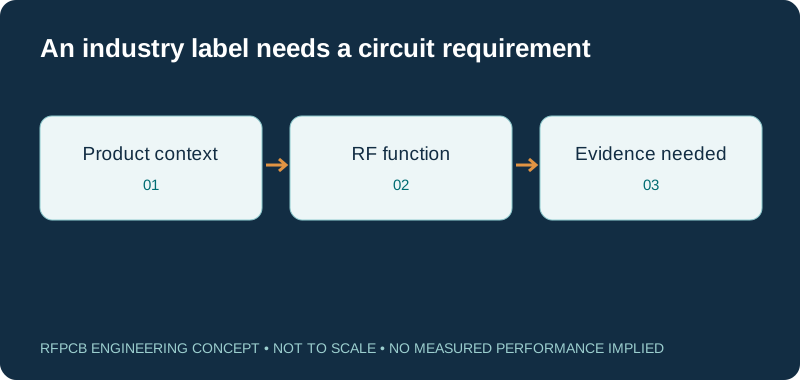
RF PCB industry applications share many construction questions, but their product requirements differ. Use this directory to find the circuit guide closest to your project, then add the operating environment, qualification requirements and acceptance evidence specific to your product.
Choose the application by its RF function and environment rather than by a broad industry label. The linked guides cover communications, antennas, radar, connected devices, measurement and medical RF design. An application guide supplies review context; it does not establish certification, customer history or approval for a regulated product.
Choose a relevant application route
| Project context | Application guide | Question to bring |
|---|---|---|
| Wireless infrastructure | Base-station PCB | Feed, power and integration requirements |
| High-frequency radio | 5G and millimeter-wave PCB | Loss, phase and transition sensitivity |
| Automotive sensing | 77 GHz radar PCB | Band, antenna geometry and validation |
| Connected sensors | RFID, IoT and LoRa PCB | Protocol, antenna and installation |
| Instrument front ends | Test and measurement PCB | Reference planes and repeatable response |
Wireless infrastructure and radio systems
Start with base-station PCB when the design combines RF distribution, power and supporting functions. For millimeter-wave paths, use the 5G and millimeter-wave guide. Describe the actual frequency range and architecture; a network-generation label alone does not identify every electrical requirement. Bring the loss, phase and integration questions that control your board.
Antennas and coordinated arrays
Use the antenna PCB guide for radiating structures and feeds, then the phased-array guide for multiple coordinated elements. Identify the installation and surrounding enclosure as well as the board. Choose acceptance evidence that addresses the complete intended configuration instead of relying only on a laminate designation or an isolated coupon result.
Automotive sensing and radar integration
The 77 GHz automotive radar guide provides a route for that specific sensing context. State the operating band, mechanical interfaces and customer validation requirements. The page does not establish automotive qualification for an arbitrary build. Separate bare-board fabrication evidence from assembly calibration and the product-level testing needed for the intended installation.
Satellite links and aerospace project requirements
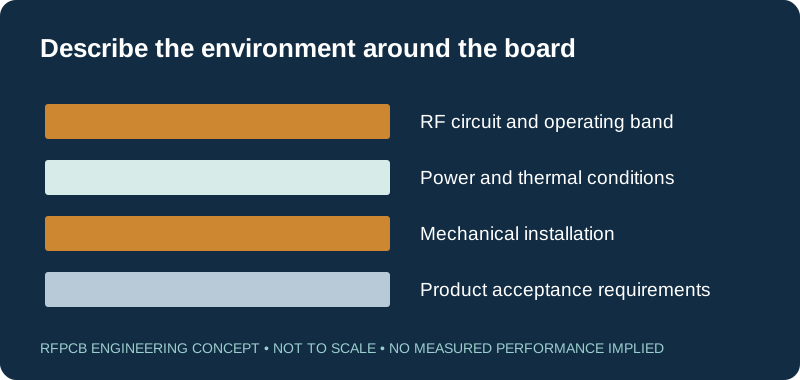
Navigate to satcom and aerospace PCB when the project concerns satellite communications or an aerospace RF subsystem. Add the actual environmental and customer requirements rather than assuming one standard package fits the sector. Identify whether the request concerns a terrestrial terminal, equipment within another system or a different installation, because that context defines the review.
Connected products and remote sensors
The RFID, IoT and LoRa guide helps organize protocol, antenna and link-budget questions. The civilian UAV datalink guide covers another communication context. Supply the radio configuration, antenna arrangement and intended surroundings. Range or reliability cannot be promised from the board material alone; define the system conditions and evidence relevant to the product.
Medical electronics and measurement equipment
Use medical RF PCB for circuit and manufacturing questions within a medical product, and test and measurement PCB for instrument paths or fixtures. Keep product approval responsibilities explicit. An RF manufacturing review does not replace the device owner's regulatory, safety or clinical requirements, and the directory makes no claim of medical certification.
Choose a functional guide when the industry is broad
A product may need several different guides. Follow LNA PCB for receiver noise concerns, filter and duplexer PCB for frequency-selective networks, or power-amplifier PCB for power and heat questions. These functional routes can be more useful than assigning the entire board to a single market category.
Build the application-specific request
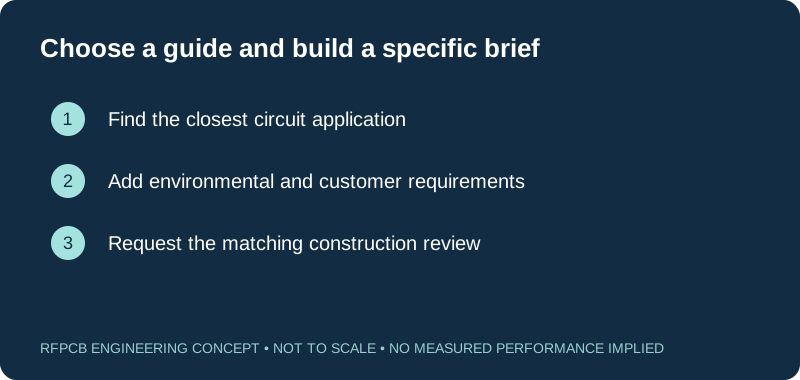
Include the circuit purpose, band, environment, board revision and required reports when submitting a project review. Attach customer specifications that govern the order and identify open qualification questions. The quality page helps organize evidence requests. A relevant application example can guide the discussion, while the accepted project package defines the actual deliverable.
Prepare a reviewable engineering request
Check only the requirements you have actually documented. This list records readiness; it does not inspect your files or certify a design. Missing information is useful: identify it explicitly so the engineering review can resolve it before a production release.
These inputs are processed in your browser and are not submitted by this tool. The downloaded summary is a plain-text planning record. Use the secure quote form to send files; request an NDA first if your project requires one.
Manufacturing context
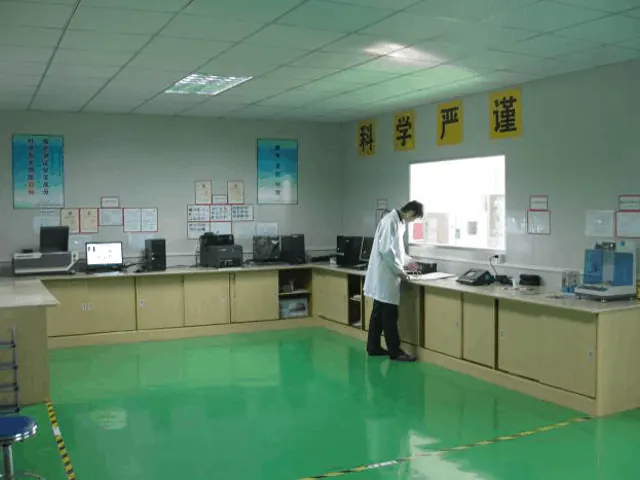
RFPCB and PCBSync share the manufacturing facility shown below. These process photographs illustrate the production environment; they are not evidence that a particular board, material grade or RF performance has been qualified. Request the documentation and inspection scope applicable to your project.


Using the industry directory
Does an industry listing mean RFPCB is certified for it?
No. Listings organize technical topics. Request and verify current facility and certification documentation for the required scope, and retain product-specific qualification responsibilities.
Which guide should I use for a mixed-function board?
Start with the function that drives the material or layout decision, then add the relevant antenna, amplifier, filter or receiver guides.
Are application examples customer case studies?
No. A technical application guide is not evidence of a completed customer project. Use explicitly identified evidence and project records when evaluating experience.
What if my industry is not listed?
Describe the RF function, band, environment and acceptance requirements. Those details can establish a useful engineering review path without a matching industry label.
Continue your engineering review
Bring the product requirements into the board review
Share the RF function and intended operating conditions together with customer specifications. Identify the board-level work requested and the product-level decisions your team retains.
Sources and engineering scope
- RFPCB application-guide directory
- RFPCB quality, testing and evidence scope
- RFPCB circuit-specific design guide
Manufacturer values apply to the identified grade, test method and construction. Engineering examples on this page are illustrative; they are not measured product results, inventory statements or certification claims. Manufacturer and product names belong to their respective owners. Keep the applicable datasheet revision with your approved manufacturing package.
Ready for a quotation?
Send your requirements for a material, stackup and manufacturing review. Price and schedule are confirmed for your project.