
See the process behind your next RF board.
Explore real equipment photographs, connect each process to a design risk, and prepare a focused supplier review. RFPCB and PCBSync share the same manufacturing foundation.

Build your factory-review agenda
Choose your main review area. The suggested questions help you prepare a visit or remote discussion; they do not book an appointment or confirm that a particular process is approved for your board.
What an RF PCB factory review should establish
A useful factory review connects the equipment, people and records to the exact product you plan to purchase. An RF board may look similar to a general-purpose circuit board while requiring different material handling, geometry control and electrical acceptance. Start with the operating band, circuit function, laminate grade, stackup and critical dimensions. Then ask how the proposed production route will preserve those requirements.
RFPCB focuses the conversation on RF and microwave manufacturing. The shared PCBSync operation publishes information about imaging, drilling, lamination, plating, inspection and laboratory resources. Those references provide context for a supplier review; they are not a substitute for a project-specific capability decision. Read the RFPCB capabilities overview with your actual drawing available.
Do not combine isolated maximum values into an assumed construction. A thin PTFE core, heavy copper, small holes and an unusually tight registration requirement may each be possible in some builds but need a different review when combined. Specify the full combination and identify which dimensions are functional requirements and which can be discussed.
Inside the shared manufacturing facility
These photographs come from the shared RFPCB / PCBSync factory archive. They show equipment and laboratory areas, not the build history of a particular customer order. Equipment configurations and availability can change; request a current review of the line relevant to your project.


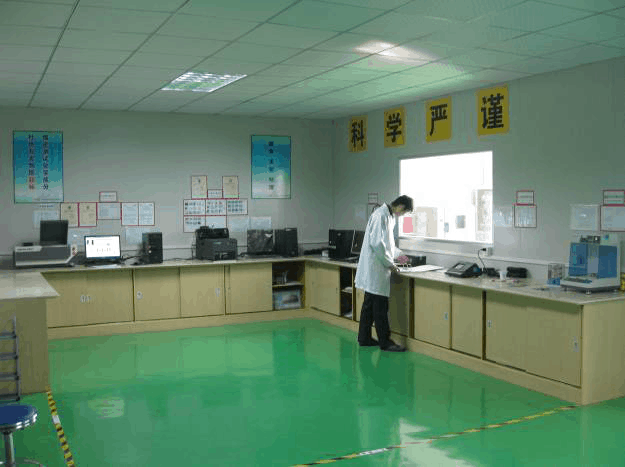
For a visit, agree which areas and records will be reviewed before making travel arrangements. A remote review can start with a defined equipment list, process flow, sample report format and engineering questions. Photography, visitor access and any customer-sensitive production information should be discussed with the team in advance.
Follow the board from data to dispatch
Engineering and material release
Confirm one drawing revision, the exact laminate and bonding system, copper options, thickness schedule and approved alternatives. Resolve DFM questions before the construction becomes a production instruction.
Imaging, drilling and lamination
Connect pattern definition, hole location and layer registration to the critical RF geometry. Review reference-plane spacing, via structures, cavities and any sequential build steps in the proposed route.
Plating, finish and profiling
Identify finished copper and hole requirements, exposed RF areas, final outline and mechanical interfaces. Surface finish is part of the circuit and assembly review, not just a cosmetic preference.
Bare-board inspection and test
Agree electrical test, visual inspection, coupons and any impedance or dimensional reporting. Explain which features require recorded measurements and what acceptance limits apply.
Assembly and integration
For populated boards, define sourcing responsibility, approved MPNs, placement revision, process-sensitive parts and the thermal path. Match inspection and functional tests to the assembly drawing.
Release and shipment
Check that the agreed documentation, identification, packaging and delivery instructions are complete. Keep the approved construction and any deviations traceable to the shipment.
Ask the questions that matter for RF manufacturing
Material identity and construction
Ask how the exact laminate grade, thickness and copper option are identified in the production package. A brand name alone is insufficient. For mixed-material builds, include every bonding layer and the planned lamination sequence. Use the materials directory to prepare your shortlist.
If a substitution is proposed, review its electrical, thermal and mechanical consequences before approval. Similar nominal Dk values do not establish interchangeability.
Controlled geometry and reference planes
Identify the controlled nets and their reference planes, nominal width, spacing and acceptance method. Include connector launches and transitions in the engineering discussion. A coupon verifies its own defined structure; it does not automatically prove the behavior of every discontinuity.
The controlled-impedance guide explains the information needed for a useful review.
PTFE and special mechanical features
For PTFE, cavities, back drilling or mixed dielectric systems, request a process review for the actual geometry. Define depth references, remaining stub targets and areas that must remain exposed or protected. Avoid relying on a generic equipment photograph to establish a finished tolerance.
Bring the relevant cross-section and drawing detail so the engineering team can identify the intended datum and measurement method.
Measurement boundaries
Separate continuity testing, impedance testing, material characterization and assembled RF performance. They answer different questions. Define frequency range, reference planes, fixture treatment and reporting requirements for RF measurements.
Use the quality and test page to decide which evidence belongs in your supplier acceptance package.
Build qualification around current documents
Ask for documents that identify the legal entity, facility, scope and validity relevant to your order. A certificate badge or equipment list cannot establish every requested qualification. If your procurement process requires a specific quality-system certificate, customer approval, material declaration or traceability format, state that requirement explicitly and request the current supporting document.
Report samples should explain the method, units, limits and association with a production lot. For a new supplier, a limited prototype can help validate the agreed communication and inspection package before larger releases. Record the accepted construction and test conditions so subsequent production is compared against the same baseline.
A supplier review also needs a clear escalation route. Identify who resolves DFM questions, who approves changes and who communicates schedule effects. If a drawing changes after release, assess its impact on work already completed, purchased material and the required test scope. Keep commercial approval and engineering approval visible rather than treating either as an implicit substitute for the other.
Make the visit useful for both teams
Send the proposed agenda, attendee roles and the main technical questions before the meeting. Specify whether you need an overview of the manufacturing route, a quality-system discussion or a review of a particular RF construction. Request the relevant engineering or quality participants so the session can resolve decisions instead of becoming only a general tour.
Prepare a non-confidential outline first if an agreement is still being arranged. Use the NDA request process to coordinate the required document review before sharing restricted files. Confirm the address and arrival instructions directly; do not book travel based only on a website location statement.
After the review, keep a short action list with owners and due dates. Separate documents received, questions answered and items still awaiting evidence. A productive review ends with an agreed next step, such as a stackup proposal, a prototype quotation or a defined qualification build.
Factory-review preparation checklist
Select what is ready. This checklist runs locally and does not upload files or place an order.
Use the first build to close the review loop
Define what the first build is meant to prove before deciding its quantity. It may be intended to confirm a connector interface, review an inspection format or compare a measured RF structure with the design model. Those objectives require different sample arrangements and reports. Write the objective into the engineering discussion so the prototype is useful when it arrives.
After the build, compare the delivered documentation with the agreed list and record any open questions. If a measurement needs clarification, identify the exact board, revision, method and limit rather than relying on a general pass statement. Carry the accepted findings into the next release, including any approved construction changes and revised inspection instructions.
Continue your supplier review
Understand the process
Review the factory, manufacturing capabilities and quality and test scope together. Match the production route and requested records to the board you intend to build.
Prepare the engineering package
Use the RF PCB design guide, stackup concepts and engineering examples to organize the decisions that remain open before quotation.
Plan the handoff
Review the NDA request process before confidential disclosure. Use the lead-time planner to discuss the required ship date and arrival date separately with the team.
Frequently asked questions
Can I arrange a factory visit?
Contact the team to agree the visit format, site address, attendees and agenda before travel. Availability and access to particular areas must be confirmed.
Do equipment photos confirm my board is manufacturable?
No. Photos show the shared facility archive. Engineering must review your exact material, stackup, geometry and inspection requirements.
Can RFPCB and PCBSync share factory information?
RFPCB and PCBSync operate from the same manufacturing foundation. This page uses shared factory photographs and links to the published equipment references.
How do I request qualification documents?
List the required certificate scope, legal entity, facility, test reports and document dates in your enquiry. Request current documents applicable to your project.
Published factory references
Review the shared PCB equipment archive, PCB laboratory information and manufacturing overview. These sources support the facility context; your quotation and approved technical package define the order scope.
Turn the factory review into a build decision.
Send the construction, your key uncertainty and the evidence you need. We can then discuss the relevant process, review route and next engineering step.
Ready for a quotation?
Send your requirements for a material, stackup and manufacturing review. Price and schedule are confirmed for your project.