
Cost engineering · Controlled material changes
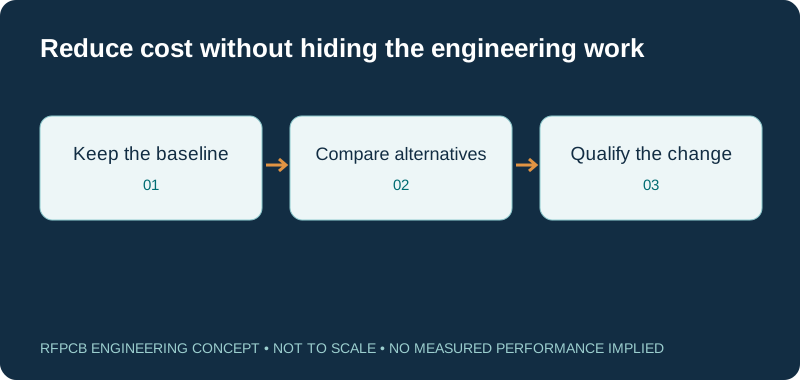
Lower-cost Rogers PCB alternatives should preserve the requirements that make your RF circuit work. Compare the approved baseline with a hybrid construction, another named grade or a manufacturing change, and include the cost of proving the alternative.
An alternative laminate is a candidate, not an automatic equivalent. First evaluate panel utilization, RF-layer allocation and unnecessary process constraints. If a material change is still attractive, compare exact grades and test the resulting construction against the same electrical and reliability requirements.
Four routes to a lower total project cost
| Route | What can change | What must be checked |
|---|---|---|
| Panel and quantity planning | Material allocation and setup per board | Rails, coupons, yield and accepted-board quantity |
| Selective hybrid stackup | RF laminate used only where required | Field distribution, bonding, symmetry and qualification |
| Named alternative material | Laminate source and electrical model | Geometry, loss, temperature behavior and traceability |
| Specification review | Finish, tolerances or test scope | Keep every requirement that serves a real product need |
| Commercial comparison | Delivery terms and repeat quantities | Same acceptance scope, currency and price validity |
Material change break-even calculator
Enter comparable reviewed quotations with identical delivery and testing scope. Break-even quantity = qualification budget / positive unit-price reduction, rounded up. Example values are arithmetic scenarios, not supplier prices. Schedule cost and future purchase risk are not estimated.
Define what must remain equivalent
Start with the performance and purchasing requirements of the approved product. Specify operating band, insertion loss, return loss, impedance, critical dimensions, temperature conditions and any required material recognition. Some constraints may be negotiable; others are part of the product qualification and cannot be changed by purchasing alone.
A useful alternative proposal names the manufacturer, exact grade, core thickness, foil and bonding products. A description such as “same Dk” omits too much information. Ask engineering to identify the evidence needed to approve the proposed change before the supplier invests in another prototype.
Review the baseline before replacing the laminate
A high board price can come from setup, inefficient nesting, special drilling, a demanding finish or a test requirement rather than the RF laminate itself. Separate these cost drivers in the quotation. If the baseline has never received a panel or tolerance review, that is often a sensible first discussion.
Use the RF PCB cost model to organize the quoted inputs. The model is useful for sensitivity analysis: it can show whether an assumed material saving is meaningful compared with fixed costs. It cannot identify the factory price of an unspecified construction.
Evaluate hybrid RF and FR-4 constructions
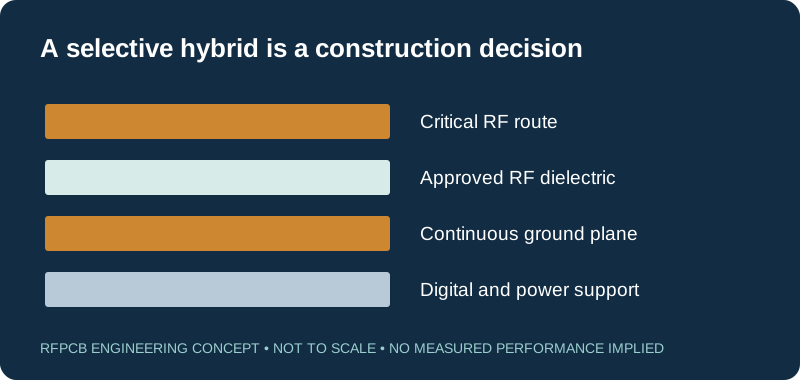
A hybrid design reserves an appropriate RF dielectric for sensitive layers and uses another approved system where its properties are sufficient. The decision must follow the field distribution and routing requirements, not an arbitrary percentage of Rogers material. A nearby continuous ground plane can help define the sensitive RF region.
The complete construction still needs compatible bonding, thickness balance and a reviewed press sequence. Compare the hybrid stackup approach with the existing build, including any additional processing and verification. A material-volume reduction does not automatically translate into the same percentage reduction in finished-board price.
Build a shortlist of exact grades
Use material-family pages to identify candidates from Rogers, Taconic, Isola, Arlon, Wangling or another permitted manufacturer. Then move to the exact product datasheet and construction. The material cross-reference resource is a discussion aid, not a list of universally interchangeable products.
Compare the frequency and method associated with electrical values. Include reinforcement, copper options, thermal behavior and available thicknesses. If a customer drawing requires a named grade with no substitutions, obtain a formal engineering change before buying a different material, even when its nominal properties look similar.
Model the electrical consequences of the change
A different dielectric can alter trace impedance, electrical length and coupling. Copper roughness, foil thickness and surface finish can also change loss. Preserve the baseline model and replace assumptions deliberately so that the effect of each difference remains understandable.
A line-width adjustment may restore nominal impedance while changing manufacturing sensitivity or a connector transition. For a distributed circuit, the resonator dimensions and coupling gaps may need review. Do not treat a successful straight-line calculation as evidence that the entire assembled product is equivalent.
Use the break-even calculator correctly
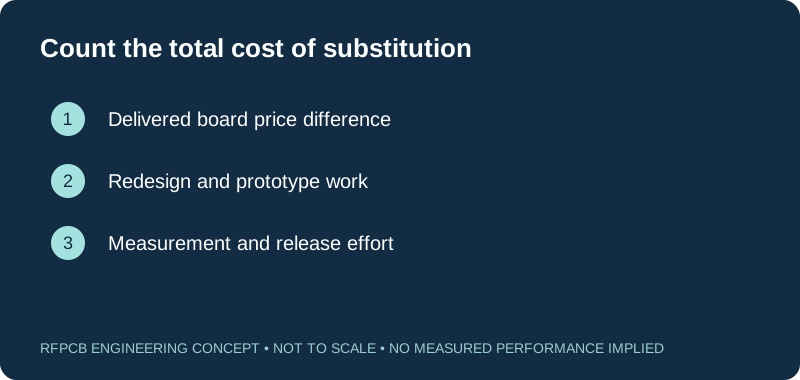
Enter comparable delivered unit prices for the baseline and proposed alternative. Add the engineering budget for layout changes, prototypes, fixtures and measurements to the qualification input. The tool calculates how many boards would be needed to recover that one-time expense under the entered assumptions.
If the alternative unit price is equal or higher, there is no positive price-based break-even quantity in this model. That does not mean the change has no strategic value: availability or a technical improvement may still justify it. Keep those reasons separate from an arithmetic claim about saving money.
Agree the qualification sample and tests
A qualification plan should address the reason the original construction was chosen. Include the critical RF structures, environmental conditions and assembly interfaces. State whether comparisons are on bare coupons, populated boards or the installed product. Preserve a common fixture and measurement reference so differences can be interpreted.
Record the alternative material lot and the final tuned geometry. If the prototype needs changes, update the cost estimate to include them. A promising early measurement is not a production release until the required acceptance evidence and manufacturing package have both been approved.
Check procurement and repeat-order assumptions
Availability depends on the exact grade, thickness, copper and supplier route. Ask for confirmation against the intended order, rather than treating a material-family catalog as current stock. Review minimum purchase quantities, price validity and the consequences of a schedule change.
The lead-time guide explains the information needed for a project-specific schedule. For repeat builds, define how lot traceability and substitution approvals are maintained. A lower first-order quotation can be misleading if later purchases require another unplanned material or construction change.
Approve a change that purchasing can reproduce
The final change record should identify the old and new constructions, revised artwork if applicable, tests performed and the approved acceptance limits. Keep separate files for alternatives that were investigated but not released. This prevents an obsolete candidate from reappearing in a future RFQ.
When requesting production pricing, reference the approved revision and quantities rather than forwarding an old comparison email. Include the exact material designation and any allowed alternatives. A clear release package protects the value of the qualification work and makes commercial comparisons faster on the next order.
Prepare a reviewable engineering request
Check only the requirements you have actually documented. This list records readiness; it does not inspect your files or certify a design. Missing information is useful: identify it explicitly so the engineering review can resolve it before a production release.
These inputs are processed in your browser and are not submitted by this tool. The downloaded summary is a plain-text planning record. Use the secure quote form to send files; request an NDA first if your project requires one.
Manufacturing context
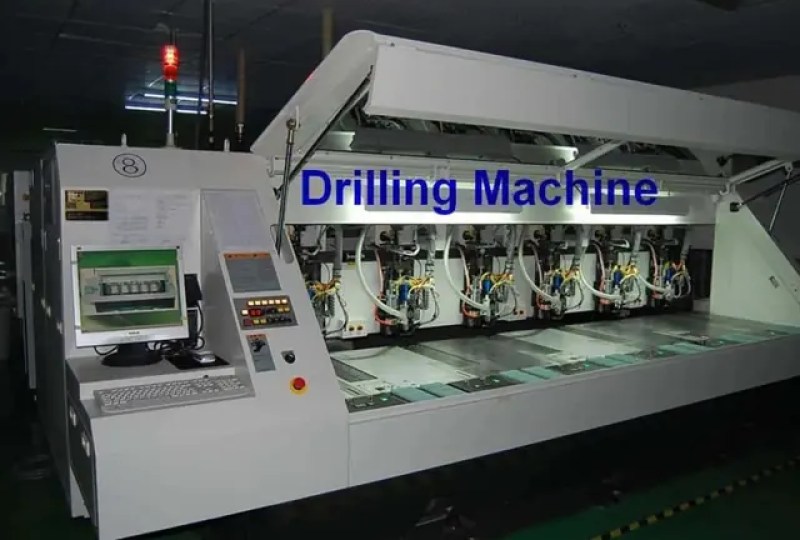
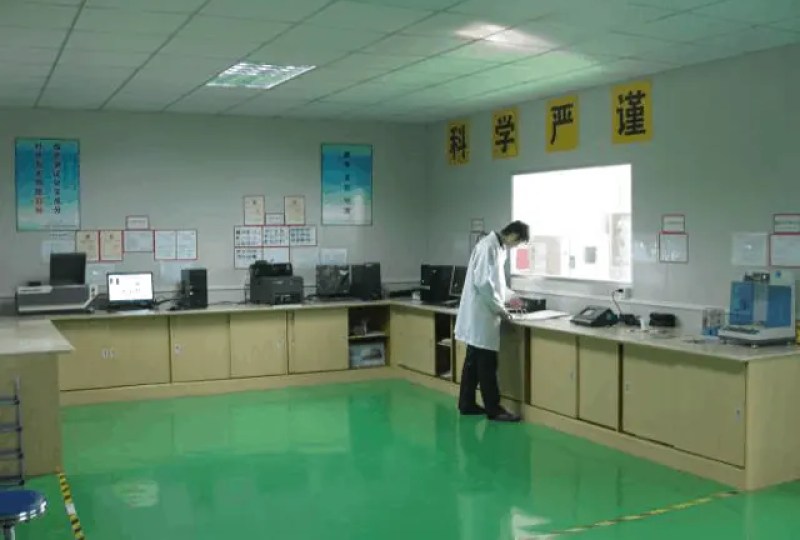
RFPCB and PCBSync share the manufacturing facility shown below. These process photographs illustrate the production environment; they are not evidence that a particular board, material grade or RF performance has been qualified. Request the documentation and inspection scope applicable to your project.

Rogers alternative material FAQs
Is Taconic or F4B a drop-in Rogers replacement?
Not by brand or family name alone. Compare exact grades, electrical models, copper, thickness, processing and product requirements. A candidate must be validated in the relevant circuit before it is treated as an approved substitute.
Can I save money without changing the RF material?
Potentially. Review panel utilization, order quantities, RF-layer allocation, unnecessary tolerances and the included test scope. A reviewed hybrid build is another possibility. None of these changes should remove a requirement needed by the product.
Does the calculator use current supplier prices?
No. It uses the prices and qualification budget you enter. Default values illustrate the calculation only. Use quotations with matching scope and delivery assumptions to turn the scenario into a purchasing comparison.
Should I approve the lowest quotation?
Compare the complete scope and evidence first. A price that excludes required material traceability, inspection or qualification may not be comparable. The selected build should satisfy the same acceptance requirements and have a controlled manufacturing revision.
Continue your engineering review
Request a baseline and alternative quotation
Identify the approved construction, the constraints that may change and the expected purchase volume. Ask for differences in price, process, test scope and qualification effort to be stated separately.
Sources and engineering scope
- Rogers RO4000 manufacturer datasheet
- Rogers RO3000 family properties and documents
- PCBSync: manufacturing information in an RFQ
Manufacturer values apply to the identified grade, test method and construction. Engineering examples on this page are illustrative; they are not measured product results, inventory statements or certification claims. Rogers product names are trademarks of their owner. Keep the applicable datasheet revision with your approved manufacturing package.
Ready for a quotation?
Send your requirements for a material, stackup and manufacturing review. Price and schedule are confirmed for your project.