
Testing directory · Match evidence to the question
RF PCB testing resources help define what a measurement or inspection must demonstrate. Start with the acceptance question, then choose the method, representative sample and reporting scope. This directory links the detailed guides and provides a checklist for preparing the request.
Connectivity, dimensional inspection, impedance testing, RF characterization and assembled-product tests answer different questions. Select the evidence that matches the requirement and agree its conditions before ordering. A test category listed here does not confirm equipment availability or include that measurement automatically in a fabrication quote.
Choose the evidence you need
| Acceptance question | Resource | Define in the request |
|---|---|---|
| What inspection is required? | Quality and evidence planning | Requirement, sample and report |
| What does a result actually mean? | Test-report guide | Method, reference planes and limits |
| Is the line impedance in scope? | Controlled-impedance PCB | Coupon construction and acceptance rule |
| How should the fixture be reviewed? | Test and measurement PCB | Launches, calibration and repeatability |
| What needs testing after assembly? | RF PCB assembly | Functional procedure and responsibilities |
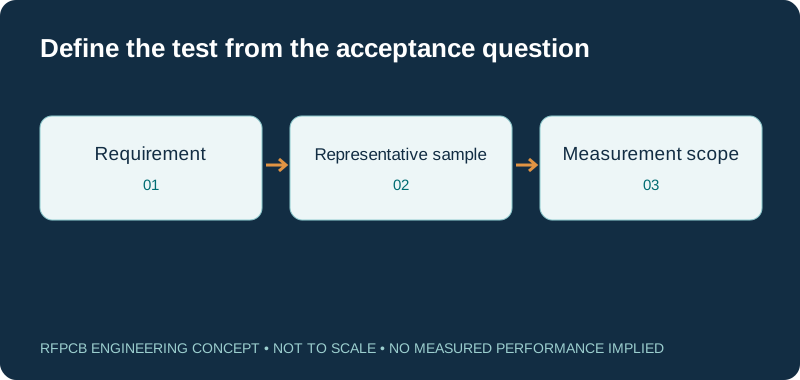
Separate inspection from RF characterization
Begin with quality and testing to describe the evidence needed for the order. A board can have several distinct acceptance questions: correct connectivity, acceptable geometry and the required RF response. Avoid compressing them into “electrical test.” Identify each requested deliverable so the proposal can distinguish ordinary inspection from additional measurement or qualification work.
Read a report through its test conditions
The RF PCB test-report guide explains how to connect a result to its method, sample and limits. Check the board revision, construction and setup before interpreting a number. Preserve the units and frequency range. A graph without reference planes or sample identity may be difficult to compare with the design model or another build.
Define impedance evidence for the intended structure
Use controlled-impedance PCB to align the target, tolerance and coupon with the proposed construction. Identify the relevant layer pair and copper geometry. An impedance result answers the agreed impedance question; it does not alone describe insertion loss, resonant response or radiation. Keep those requirements separate when deciding what additional evidence is needed.
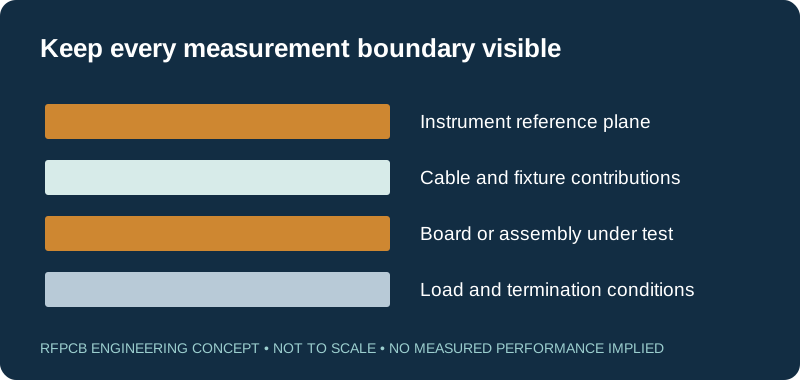
Review fixtures and reference planes
For RF measurements, continue to test and measurement PCB. Document the launches, cables and other interfaces included in the measured path. State how calibration or fixture characterization defines the boundaries. If processed results remove fixture effects, retain the method and supporting data so the comparison can be reproduced and assessed by another reviewer.
Choose a representative sample
A coupon should represent the feature that creates uncertainty. A uniform line may be useful for distributed behavior, while a transition, antenna or coupled filter needs a more specific structure. The DFM checklist helps make sensitive features visible. Agree sample construction and quantity before ordering instead of assuming one standard coupon covers the entire design.
Distinguish bare-board and assembly tests
The RF assembly guide is the next step when component placement, attachment and powered operation matter. Identify which checks happen before assembly and which require the populated circuit. Supply the functional procedure and needed interfaces for review. Bare-board acceptance and an assembled-product result should remain separate records with clearly assigned responsibilities.
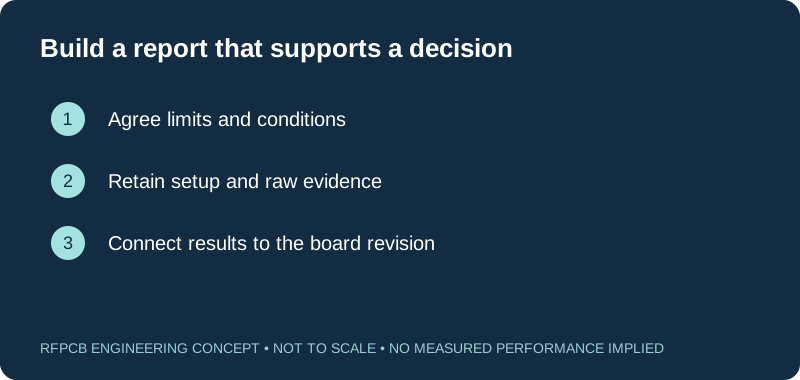
Agree limits before seeing the result
Specify the frequency sweep, operating conditions and acceptance limits while preparing the test plan. Where measurement uncertainty matters, agree how it will enter the decision. Avoid interpreting a convenient result against a newly chosen threshold. Store raw evidence, processed data and the final decision together so a future change can be compared against the original requirements.
Request the report as part of the deliverable
When using the project quote form, identify the tests, samples and report content required with delivery. If scope is undecided, state the engineering question and ask for a proposed method. Confirm equipment and fixture requirements through the project review. The accepted quotation and test plan should make clear what evidence accompanies the boards and what remains with your team.
Prepare a reviewable engineering request
Check only the requirements you have actually documented. This list records readiness; it does not inspect your files or certify a design. Missing information is useful: identify it explicitly so the engineering review can resolve it before a production release.
These inputs are processed in your browser and are not submitted by this tool. The downloaded summary is a plain-text planning record. Use the secure quote form to send files; request an NDA first if your project requires one.
Manufacturing context
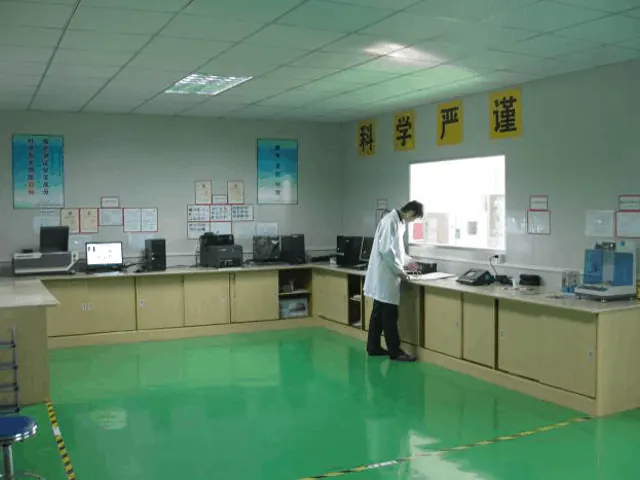
RFPCB and PCBSync share the manufacturing facility shown below. These process photographs illustrate the production environment; they are not evidence that a particular board, material grade or RF performance has been qualified. Request the documentation and inspection scope applicable to your project.


RF PCB test planning questions
Does a connectivity test verify RF performance?
It addresses connections and isolation under its own procedure. RF response requires the relevant measurement and acceptance plan.
Is TDR the same as a VNA sweep?
They provide different forms of information. Use the test-report guide to select the method that answers the specified requirement and to understand the reporting conditions.
Can a test coupon replace every product test?
No. A coupon represents a defined structure. Decide which questions it answers and which require the assembled circuit or complete product.
Are all listed measurements included in a board quote?
No. Request the methods, sample quantity and report scope explicitly, and confirm the proposed test arrangement and responsibilities.
Continue your engineering review
Specify the decision your test must support
Send the construction, sensitive features and acceptance question. Ask for a defined sample, method and reporting scope that can produce useful evidence for the next project decision.
Sources and engineering scope
- RFPCB quality, testing and evidence scope
- RFPCB test-report interpretation and measurement scope
- RFPCB test and measurement fixture guide
- RFPCB controlled-impedance construction and acceptance guide
Manufacturer values apply to the identified grade, test method and construction. Engineering examples on this page are illustrative; they are not measured product results, inventory statements or certification claims. Manufacturer and product names belong to their respective owners. Keep the applicable datasheet revision with your approved manufacturing package.
Ready for a quotation?
Send your requirements for a material, stackup and manufacturing review. Price and schedule are confirmed for your project.