

What RF PCB Volume Pricing Actually Delivers
RF PCB volume pricing is a contractual arrangement—typically 6 to 24 months—where a fabricator commits to fixed or tiered per-board rates in exchange for guaranteed annual quantities. Compared to spot-order pricing, well-structured annual contracts reduce unit cost by 18–35 %, with the deepest discounts on boards that use expensive high-frequency laminates like PTFE or ceramic-filled hydrocarbon. The savings come from three places: bulk material purchasing, reduced setup amortization, and predictable line scheduling.
If you are new to the distinction between RF boards and standard digital boards, the definition of an RF PCB covers the materials, tolerances, and applications that drive the cost differences discussed below.
Why RF Boards Cost More—and Where Volume Helps
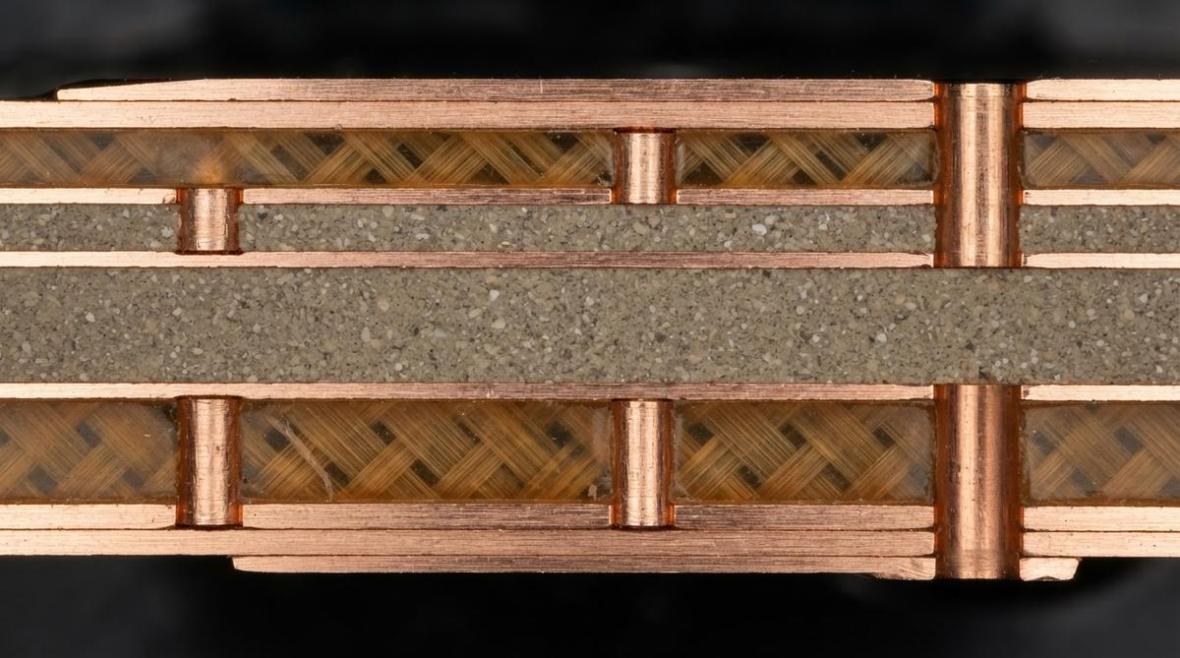
Understanding the cost structure is the first step to negotiating volume rates. RF PCBs carry cost premiums that standard FR-4 boards do not, and each premium responds differently to volume.
Material Cost (40–60 % of the Board Price)
A sheet of Rogers RO3003G2 laminate (Dk 3.00, Df 0.0010 at 10 GHz) costs roughly 8–15× more per square foot than standard mid-Tg FR-4. PTFE-based laminates such as RT/duroid 5880 can be even higher. Volume contracts let the fabricator place blanket orders with the laminate mill, locking in pricing one or two tiers below distributor list. That single lever alone can account for half the volume discount.
Setup and Tooling Amortization
Drill programs, impedance-test coupons, custom panel arrays, and solder-paste stencils all carry one-time engineering charges. On a 25-piece prototype run, tooling can add $15–30 per board. Spread across 5 000 boards per year, the same tooling adds pennies.
Process Yield and Rework
PTFE laminates are softer and more prone to smear during drilling; ceramic-filled materials are brittle and chip at panel edges. First-article yield on a new RF design is often 80–88 %. By the third or fourth production lot, process feedback pushes yield above 95 %. Volume programs benefit from that learning curve because the fabricator can amortize early scrap across the full contract quantity.
Test and Qualification
Boards built to IPC-6012 Class 3 or 3/A require microsection analysis, impedance verification on every lot, and sometimes ionic-contamination testing. Annual contracts allow the fab to maintain a standing test protocol rather than re-qualifying each order.
Typical Volume Tier Structures
Most RF fabricators offer three to five pricing tiers. The table below shows a representative structure for a 4-layer hybrid stackup (two Rogers cores, FR-4 prepreg, ENIG finish) with 50 Ω controlled impedance. Actual rates depend on layer count, material grade, and tolerances.
| Annual Quantity | Order Pattern | Typical Discount vs. Spot | Common Commitment |
|---|---|---|---|
| 1–99 | Prototype / NPI | Baseline (0 %) | PO per order |
| 100–499 | Quarterly releases | 10–15 % | Blanket PO, quarterly call-offs |
| 500–2 000 | Monthly releases | 18–25 % | 12-month contract, material buffer |
| 2 001–10 000 | Weekly / biweekly | 25–32 % | 12–24 month contract, dedicated tooling |
| 10 001+ | Kanban / VMI | 30–35 % | Long-term agreement, consigned material option |
Tier breaks are not linear. The steepest drop per unit usually occurs between the prototype tier and the first production tier (100–499 pcs) because setup costs collapse. After 2 000 units, further savings come mainly from material negotiation and yield improvement.
Structuring an Annual Contract
Forecast Accuracy Matters More Than Total Volume
Fabricators price risk into contracts. A commitment of 5 000 boards per year with ±50 % quarterly variance is worth less than 3 000 boards with ±15 % variance, because the latter lets the fab schedule material and capacity with confidence. Provide a rolling 12-month forecast, updated quarterly, and agree on a flexibility band (commonly ±10–20 % per release).
Material Consignment vs. Fab-Managed Stock
For very high-value laminates, some OEMs buy the raw material directly from the mill and consign it to the fabricator. This removes the fab’s material markup but shifts inventory risk to you. It works best when you use a single laminate across multiple part numbers and can commit to full-case quantities. The RF laminate comparison tool can help you evaluate whether consolidating to one material family is viable.
Price Escalation Clauses
Laminate prices fluctuate with PTFE resin and copper-foil markets. Contracts longer than 12 months should include an escalation clause tied to a published index or a cap (e.g., ±5 % per year). Without one, the fabricator will pad the quote to cover worst-case material inflation.
Quality and Delivery Terms
Lock in the acceptance standard (IPC-6012 class, impedance tolerance, surface-finish spec) and the delivery commitment (e.g., 15 business days from release, 98 % on-time target). For aerospace programs, confirm that the fabricator holds AS9100 certification and can maintain lot traceability across the contract.
Program Health Dashboard
Once a volume program is running, tracking its health prevents cost creep and delivery surprises. Key metrics include on-time delivery rate, first-pass yield, cost-per-board trend, and material lead-time buffer. Enter your program parameters below to see a snapshot of where your contract stands relative to typical benchmarks.
If the dashboard flags yield below 92 % after the third lot, investigate whether the fabricator’s drill parameters and lamination profile have been optimized for your specific laminate. A sustained yield issue on PTFE boards often traces back to incorrect entry speed or missing plasma desmear. Programs that maintain yield above 95 % and on-time delivery above 97 % are in healthy territory and positioned well for price re-negotiation at renewal.
Solder Paste Volume in High-Mix RF Assembly
Volume pricing discussions often extend beyond bare boards into assembly, especially for RF modules that include fine-pitch QFN amplifiers, shielding cans, and connectors. Solder paste volume per board is a useful planning metric: it feeds stencil-life calculations, paste-cartridge ordering, and waste budgets. Use the calculator below to estimate paste consumption for your assembly panel.
For a typical 50 × 80 mm RF front-end module with 120 pads averaging 0.25 mm² aperture area and a 5 mil (0.127 mm) stencil, expect roughly 0.18–0.22 cm³ of paste per board. Over a 5 000-unit annual program, that totals about 1.0–1.1 liters—roughly four 500 g cartridges of SAC305. Ordering paste on a blanket PO alongside the bare boards simplifies logistics and may qualify for combined-program pricing from your assembler.
Lead Time and Scheduling Advantages
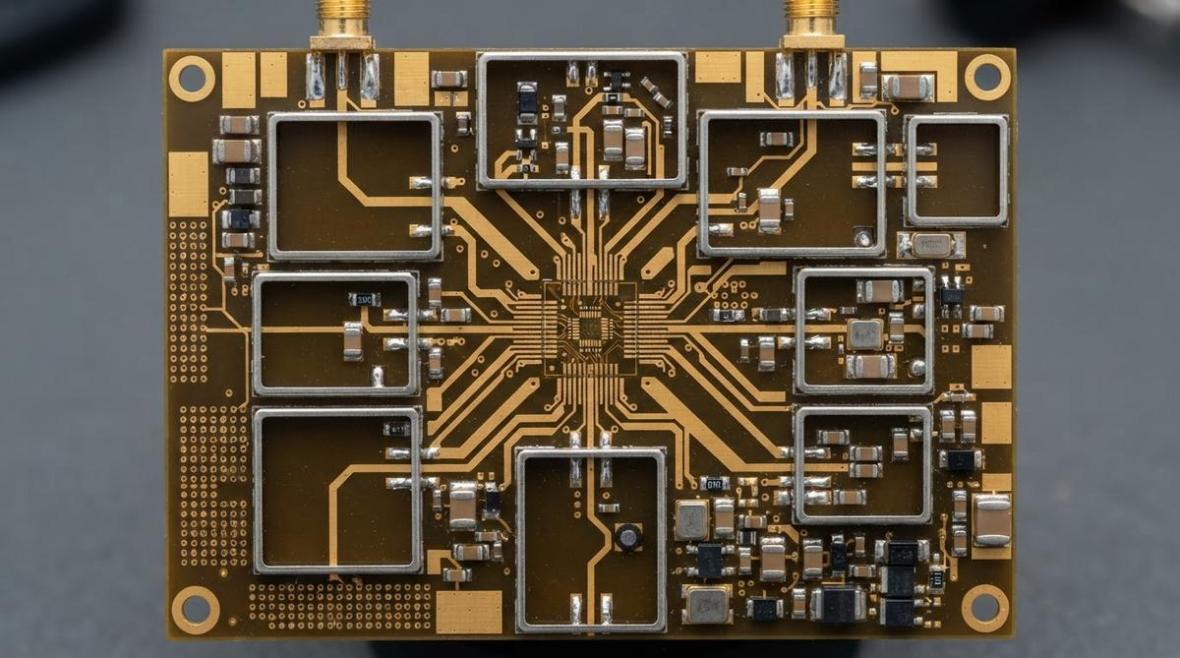
Beyond unit cost, volume contracts shorten effective lead time. Fabricators with a standing order can pre-stage material and hold panel tooling in active storage. Typical RF PCB lead times for contract releases drop to 10–15 business days versus 20–25 for spot orders on the same stackup. Some programs achieve weekly Kanban delivery with as little as five business days from call-off.
Common Pitfalls in RF PCB Volume Programs
- Over-committing on quantity. Signing for 10 000 boards when realistic demand is 4 000 may get a better unit price, but unused material liability and cancellation charges can wipe out the savings.
- Ignoring revision control. An ECO that changes a via drill size or adds a layer resets tooling. Build ECO handling into the contract: define how many no-charge revisions per year are included and what triggers a re-quote.
- Single-source risk. If your design uses a sole-source laminate (e.g., a specific Taconic or Isola grade), confirm the fabricator’s supply-chain buffer. A 6-week laminate stock-out can halt your entire program.
- Skipping SPC. Without statistical process control on impedance, registration, and plating thickness, you have no early warning of drift. Require Cpk ≥ 1.33 on critical parameters as part of the contract.
When Volume Pricing Does Not Apply
Not every RF project benefits from an annual contract. If your total annual need is under 100 boards, or if the design is still iterating through NPI, spot-order pricing with quick-turn prototyping is more cost-effective. The minimum order guide for RF PCB prototypes covers how to keep small-run costs under control until volumes justify a program.
Negotiation Checklist
- Gather 12 months of historical demand data by part number.
- Identify which laminates can be consolidated across part numbers.
- Request quotes at two or three tier levels, not just the target quantity.
- Define flexibility bands (±10–20 %) and the penalty structure outside them.
- Include an escalation clause for material cost changes.
- Specify quality standard, impedance tolerance, and acceptance criteria.
- Agree on SPC reporting cadence (monthly or per lot).
- Set a contract review at 6 months with an option to adjust tier at 12 months.
FAQ
What annual quantity qualifies for RF PCB volume pricing?
Most fabricators begin offering tiered discounts at 100 boards per year for a single part number. Meaningful savings (18 %+) typically start at 500 units annually, especially on boards using PTFE or ceramic-filled laminates where material purchasing leverage is significant.
Can I combine multiple part numbers into one volume contract?
Yes, if the part numbers share the same laminate, layer count, and surface finish. Fabricators call this a “family program.” It increases total material pull, which improves your tier placement, but each unique part number still carries its own tooling charge.
How do material price changes affect a locked-in rate?
Contracts under 12 months usually hold a fixed price. Longer agreements should include an escalation clause—commonly capped at ±5 % annually—tied to the laminate vendor’s published price list or a mutually agreed index. Without this clause, the fabricator builds in a risk buffer that raises your baseline price.
Does volume pricing apply to hybrid stackups (Rogers + FR-4)?
Absolutely. Hybrid stackups are among the most common candidates for volume programs because the high-frequency core is the dominant cost driver. Volume purchasing of that core laminate, even when bonded with standard FR-4 prepreg, yields substantial per-board savings. Refer to the high-frequency PCB fabrication overview for stackup options.
What happens if I need to cancel mid-contract?
Typical contracts require you to absorb the cost of any raw material already purchased or in the pipeline, plus a cancellation fee (often 10–15 % of the remaining contract value). Negotiate these terms explicitly before signing; vague cancellation language benefits neither party.
Get an exact price: send your Gerber files for a free DFM review and a firm RAYPCB quote in hours, not days.
Ready for a quotation?
Send your requirements for a material, stackup and manufacturing review. Price and schedule are confirmed for your project.